Shiatsu is a Japanese healing art rooted in touch, presence and deep listening.
Through responsive touch, it offers a deeply relaxing space for the body and nervous system to soften, settle and reconnect with their own natural rhythms.
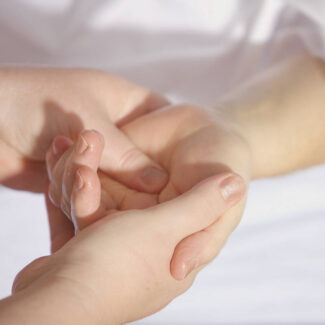
Why have Shiatsu?
Regular Shiatsu helps to release physical tension and calm the nervous system.
It can support a wide range of physical and emotional conditions, especially those linked to stress, overwhelm or ongoing strain.
Over time, you may begin to feel more resourced and steady in periods of change.
It is especially effective for:
Hormonal and cyclical health
Nervous system and emotional wellbeing
Chronic and stress-related conditions
Physical tension and pain
Touch is the first sense we acquire.
It reaches places inside that predate speech or for which there are no words.
As you become more aware of your body as an integrated whole and begin to feel safe enough to release tension, something shifts.
You start to reconnect with your body and the deeper intelligence held within it.
From here, this can begin to inform and revitalise your life – physically, emotionally, psychologically and spiritually.
What is Shiatsu?
Shiatsu is a Japanese healing art, a way of working through touch rooted in Chinese medicine.
I use my body weight to apply pressure in a way that feels grounded and responsive, from gentle holding to deeper contact where needed.
In this tradition, there is an understanding of a vital energy that moves through the body. In Chinese it is often called Qi (Chi) and in Japanese, Ki both referring to the same underlying life force.
When this flow is disrupted, we may experience tension, discomfort or a sense of imbalance.
Through touch, pressure and a quality of deep listening to what is present, Shiatsu supports this flow, helping the body to settle and restore its natural rhythm.
This kind of touch can release tension and nourish your lifeforce, often bringing a sense of deep relaxation.
In this place of rest and presence, your body-mind intelligence can begin its innate healing process, restoring flow and balance.
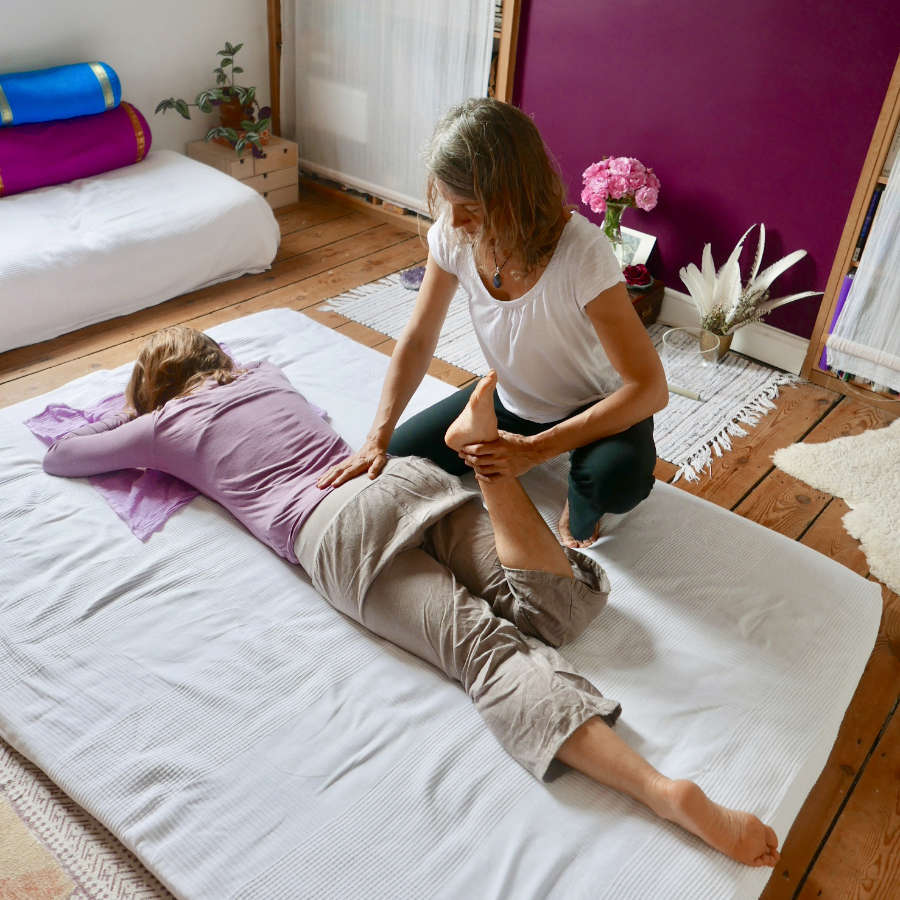
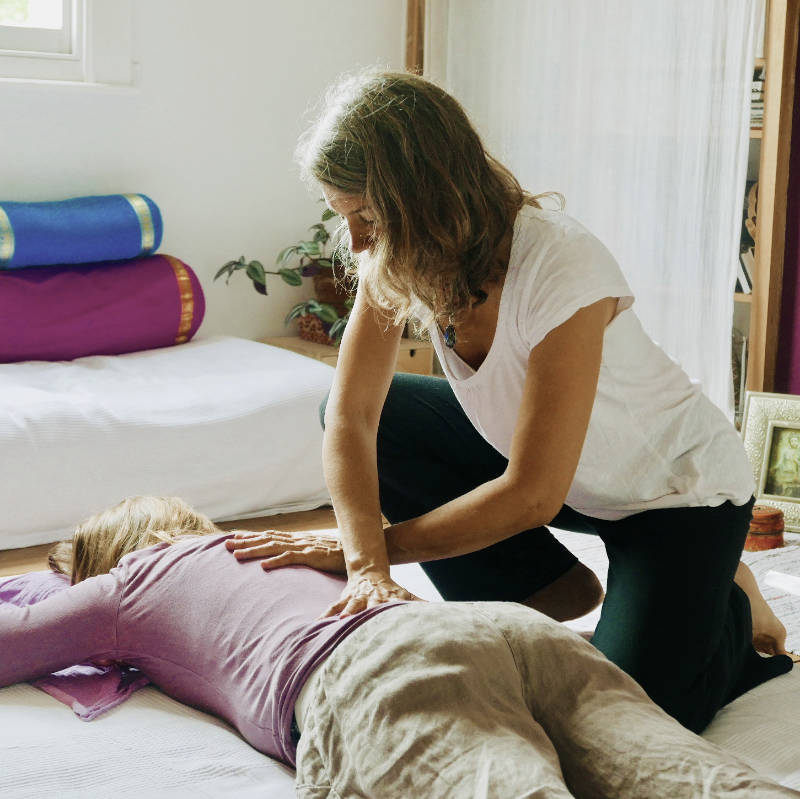
What to expect in a session?
A space to pause, lie down and gently arrive in your body.
We begin with a short conversation about what is present for you, informed by your pre-appointment questionnaire.
I invite you to lie down fully clothed on a futon mat. Wearing loose, comfortable clothing is ideal.
I sit beside you and support you in arriving in your body, often beginning with the breath.
Each session is a journey. It unfolds in the moment, according to what is needed. This may include deep stretches, palm and finger pressure, gentle rocking and nurturing holding.
At times, I may gently guide your awareness, but there is nothing you need to do. You can simply rest and receive.
At the end, there is space to pause and if you wish, to share or reflect on your experience.
Shiatsu is increasingly recognised as a complementary therapy supporting health and wellbeing.
In the UK, it is represented by the Shiatsu Society UK, which upholds professional standards for training and practice.
It is also offered in a range of settings, including charities, health foundations, NHS Trusts and hospitals, to support people alongside other medical treatment and in maintaining their general well-being.
Guidelines for receiving Shiatsu
After your session
You may feel deeply relaxed, grounded or more energised following a treatment. Sometimes there can also be a need for rest.
Occasionally, symptoms may shift or temporarily intensify as the body adjusts. This usually settles within a day or two. At times, an old symptom may briefly reappear before resolving.
You may notice changes immediately or over the following 24–48 hours.
If you have any questions or concerns after your session, please feel free to get in touch.
Recommendations
While you are welcome to come for a single session, this work is most effective when received as a process over time.
I usually recommend beginning with a short course of 4–6 sessions. This allows your body the time and continuity needed to settle, respond and begin to shift more deeply.
In the same way that other forms of therapeutic work unfold over time, this approach supports more lasting change, rather than short-term relief.
Sessions are spaced regularly to allow for integration between treatments.
A reduced rate is offered when committing to a course of sessions.
Fees
- Initial session (90 mins): £85
- Follow-up sessions (90 mins): £80
- Children and young people under 18 (60 mins): £40
I usually recommend an initial commitment of 4-6 sessions, as meaningful change often unfolds over time rather than in a single session.
A limited number of concessionary places are available.
If cost feels like a barrier, please get in touch and we can have a conversation.
If you would like to book a session or have any questions, you’re very welcome to get in touch.
After care
I will suggest simple ways to support you between sessions, such as gentle exercises, dietary guidance or small lifestyle adjustments.
We explore these together, choosing what feels realistic and supportive for you.
Your engagement is an essential part of the process, allowing the work to continue to unfold and supporting deeper, lasting change.
Cancellation policy:
Please give at least 48 hours’ notice if you need to change or cancel your appointment. Appointments cancelled within 48 hours will be charged in full. Thank you for your understanding.